Your guitar
could sound
better.
Three at-home checks that catch what most players ignore — intonation, neck relief, action — using just your phone and a US quarter. No tools. No appointment.

Check your guitar's intonation.
Eighteen taps. Three minutes. We'll tell you which saddles to move and which way.
What is guitar intonation, why does it matter, and how do you adjust it?
Intonation means your guitar plays in tune everywhere on the neck — not just on open strings. If your 12th fret doesn't sound exactly one octave above the open string, your saddle position needs adjusting. This tool checks three positions per string (open, 9th, 12th) so you know exactly which strings need work and which way to move the saddle.
Per-string verdict
What to do about each string, in plain English.
Measure your action with
a coin and a camera.
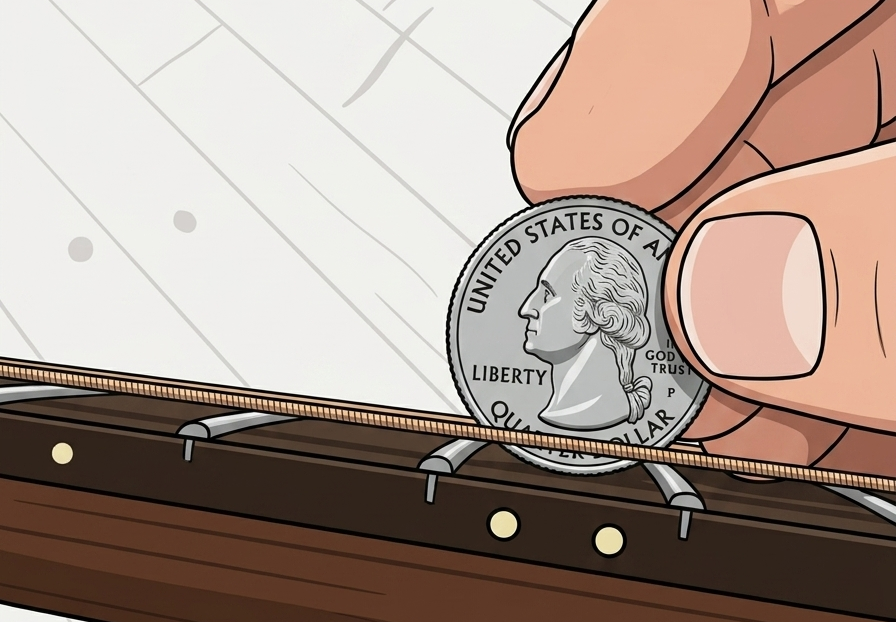
Action is the gap between your strings and the frets. Too high and the guitar fights you. Too low and notes choke. Take a side-on photo with a US quarter as scale reference — AI automatically finds the string, fret, and coin edge so you get an accurate measurement in seconds.
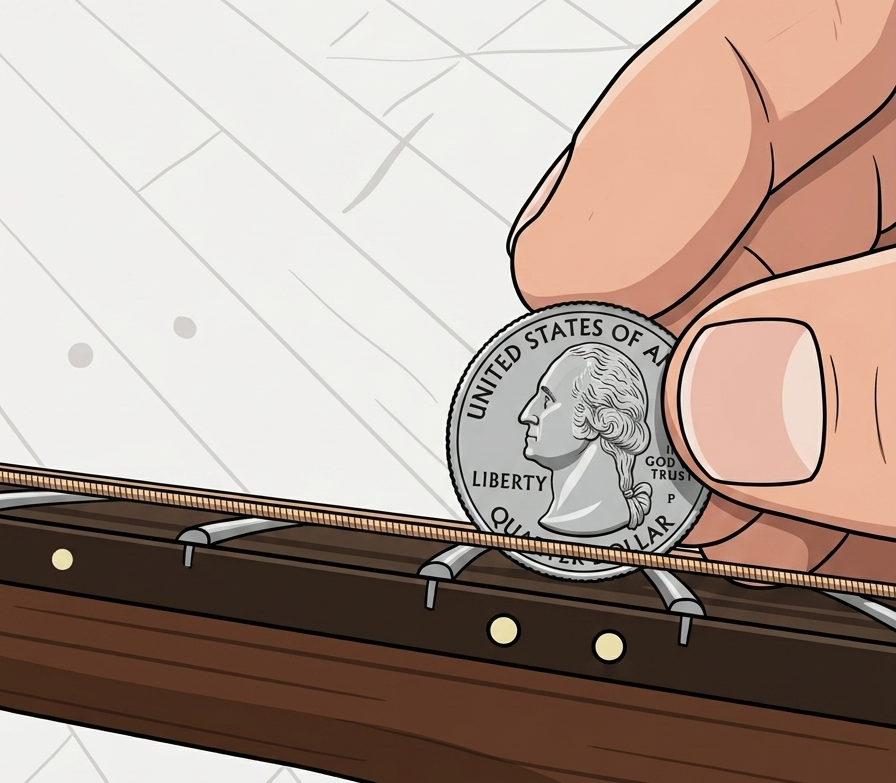
- AI line detection — no manual tapping
- Electric and acoustic targets built in
- Drag any line to fine-tune if needed
- Results in inches and millimetres
Read your neck before
you touch a single screw.
We're building an interactive tool that measures your neck relief from a photo and tells you exactly how far to turn the truss rod — and which way. Here's a preview of what's coming, plus everything you need to understand what you're checking.
- Photo-based neck bow measurement
- Exact turn-count for your truss rod
- Safe step-by-step adjustment guide
- Electric, acoustic, and bass
What you're looking at, side-on
Three states. The string is a straight reference; the neck curves underneath it. Check the gap at the 8th fret.
Too little relief
BACK-BOW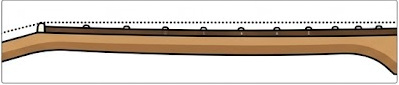
Neck is bowed up into the strings. Notes choke and buzz on the middle frets. Loosen the truss rod (counterclockwise) ¼ turn.
Correct relief
JUST RIGHT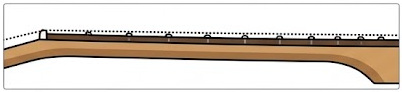
Tiny gap (~0.010 in) at the 8th fret. Strings clear cleanly across the neck. No adjustment needed.
Too much relief
TOO MUCH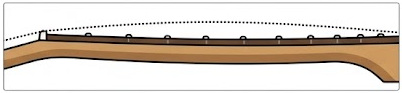
Neck dips away from the strings. Action feels high in the middle of the neck. Tighten the truss rod (clockwise) ¼ turn.
How to actually measure relief
The capo-and-press method turns your guitar into its own straight-edge.
Tune to pitch
Strings at full tension is the only state that matters. A detuned neck is a different shape.
Capo the 1st fret
This pins the string at the start of the playable neck — same job the nut does, but consistent across guitars.
Press the last fret
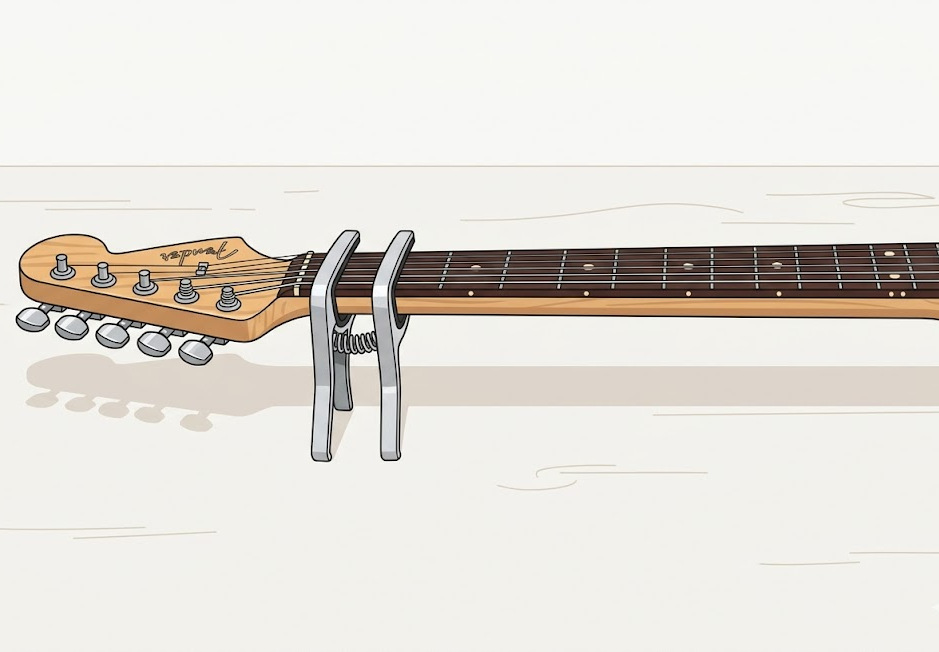
Use your fretting hand on the highest fret of the low-E. The string is now a taut straight line over the neck.
Look at the 8th fret
Slip a business card under the string. ~0.25mm of gap = correct. None = back-bow. Several mm = too much relief.
One-eighth turn at a time
Truss rods are responsive. A quarter turn is a lot. Adjust ⅛, retune, wait 10 minutes, re-measure. If it ever feels stiff, stop — wood and metal don't argue, they break.